
Your regular check-up, explained
A dental exam is a careful check of your teeth, gums, mouth and jaw. Routine exams catch small problems before they become painful or expensive, and most patients have one every six months at their regular cleaning. Bathurst Centre Dental Care provides dental exams in Thornhill for families from Vaughan, Markham, Richmond Hill and North York, with evening and Saturday appointments.

What does a dentist look for during a dental exam?
Your dentist examines more than your teeth. Here is what we check at every exam.
Teeth
Tooth decay (cavities), cracks, worn fillings and signs of excessive wear or grinding.
Gums
Signs of gum disease such as redness, bleeding, recession and deepening gum pockets.
Tongue, cheeks and throat
Oral disease, such as cold sores and oral cancer. An oral cancer screening is part of every exam.
Jaw
Temporomandibular joint disorders (TMJ), clicking, and problems with your bite.
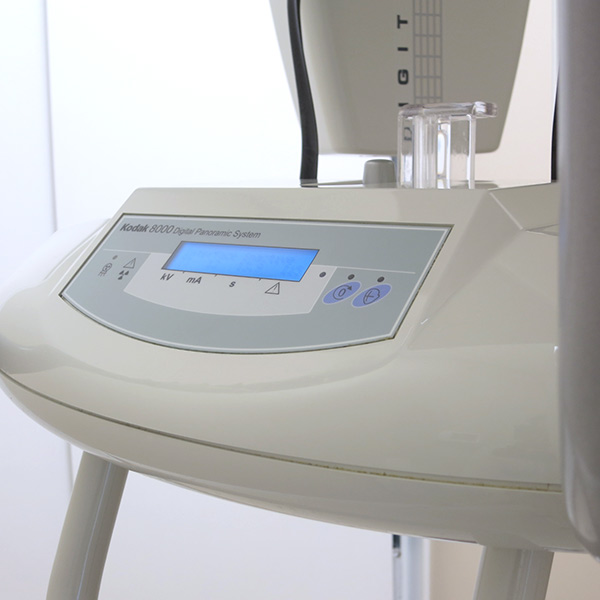
X-rays see what the eye can’t. A dental exam may include X-rays to check for cavities between the teeth and problems below the gumline or in the jaw, where they cannot be detected by visual inspection. Learn about our digital X-rays.
How often should I have my teeth examined?
Most patients follow a simple schedule. Your dentist may recommend a different one based on your oral health.
X-rays
Usually recommended to check below the surface.
Comprehensive exam
Includes a full gum measurement.
What happens at a new patient exam at our Thornhill clinic?
A first visit is a comprehensive exam. It takes a little longer than a routine check-up because we are building a complete picture of your oral health.
Health history
We review your medical history, medications and any concerns you have about your teeth.
Exam and X-rays
The dentist checks every tooth, your gums, bite and jaw, and takes digital X-rays and digital scan of your teeth as needed.
Gum measurement
We measure the pockets around your teeth to screen for gum disease.
Your plan
We explain what we found, your options and all charges before any treatment begins. No hidden fees.
Why do routine dental exams matter?
Many dental problems do not hurt until they are advanced. A regular exam is the simplest way to stay ahead of them.
Cavities are easier to fix early
A small cavity needs a small filling. Left alone it can reach the nerve and need a root canal or extraction.
Gum disease is usually silent
Early gum disease is reversible with cleaning and good home care. Advanced gum disease is the leading cause of tooth loss in adults.
Oral cancer screening
Your dentist checks the soft tissues of your mouth for unusual patches or sores that should be examined further.
Growing smiles
For children, exams track tooth development and bite. The Canadian Dental Association recommends a first visit within six months of the first tooth, or by age one. Children’s dentistry.
Dental exam FAQs
A routine check-up exam is short. Combined with a professional cleaning, plan on about an hour. A comprehensive new patient exam with X-rays and gum measurements takes a little longer.
Yes. Bathurst Centre Dental Care welcomes new patients from Thornhill, Vaughan, Markham, Richmond Hill and North York. You can book online or call 905-707-8008. Same-day appointments are available most days.
Bring your dental insurance information, your CDCP card if you have one, and a list of any medications you take. If you have recent X-rays (less than 1 year old) from another dentist, ask them to send them to us.
Yes. The CDCP covers complete, routine, specific and emergency exams, as well as X-rays, for eligible patients. We accept CDCP patients and bill Sun Life directly for covered services. Learn more about the CDCP at our clinic.
A check-up (recall exam) is a quick look for changes since your last visit, usually done at each cleaning. A comprehensive exam is a full review of every tooth, your gums, jaw and soft tissues, with a complete gum measurement. It is done for new patients and about every three years after that.
No. A dental exam is a visual and gentle hands-on check. Measuring gum pockets with a small probe is usually painless. If any part of a visit makes you anxious, tell us and we will go at your pace.
The Canadian Dental Association recommends a first visit within six months of the first tooth coming in, or by one year of age. Early visits let us check development and give you tips on brushing and feeding habits.
Does my insurance cover dental exams?
Most insurance policies cover dental exams once or twice a year. However, coverage will vary between policies. We can help to confirm your policy coverage when you come in for an appointment.
Special Offers/Coupons
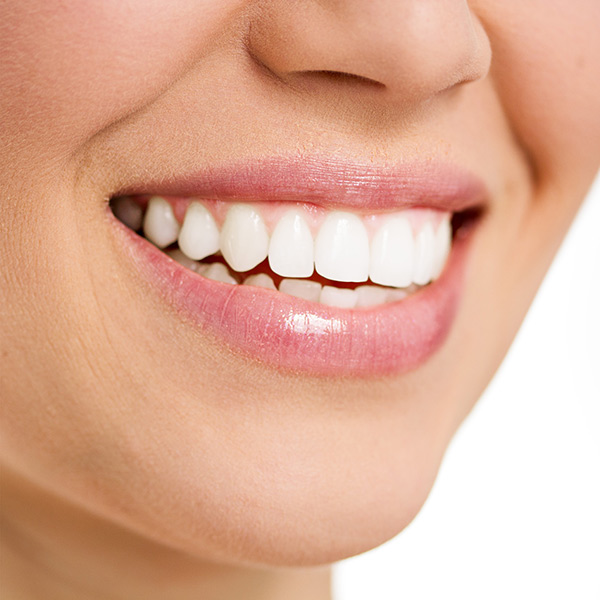
Free Teeth Whitening!
Book a comprehensive dental exam with x-rays and a cleaning and receive professional teeth whitening (a $250 value)!
Our teeth whitening system uses an impression of your actual teeth to ensure even whitening and is only available from a dental professional. Book your appointment today!
Offer valid until M 28, Y. Offer valid for current ODA fee guide patients only. Cannot be combined with any other discount. Also available for new patient exams – refer a friend – they get free whitening and you get free movie tickets!


Hello Dr.
My dentist removed calculus from my teeth 2 weeks ago and after that I felt like my teeth are a little bit loose. Do I need gum and dental bone graft?
Linda
Hi Linda, unfortunately, without an in-person exam and x-rays I can’t diagnose your gum condition. It’s possible that you had some form of gum disease involving bone loss prior to the calculus removal. A gum re-assessment/measurement can be made 4-6 weeks after the calculus removal to see how your gum responds to the treatment and then a decision may be made by your dentist to see gum surgery could be beneficial. Some gum surgeries that help treat gum disease involve bone grafting and/or gum grafting, some involve removing excess and inflammatory gum tissues to reduce pockets, some may involve opening a gum flap to expose and help remove any remaining calculus deep under the gum line. No surgery but regular cleaning every 3 months may also be an option. Please discuss your concerns with your dentist so they can assess the best treatment for you.
The last couple years I noticed I get a lot of saliva in my mouth. Not where I’m drooling but where I have to keep swallowing. And I sing a lot and I notice I can’t get through a verse without a lot of saliva and I feel I need to swallow and if I don’t it’s too much in my mouth. I hate it because it really interferes with my singing. I can’t even imagine anyone else with this problem. I go for a cleaning/checkup every 6 months and I just went last week and everything is good. In 2013 I did have to get a back upper molar removed, could it be that? Please help me!
Hi Marlaina, excess saliva, sometimes called hypersalivation, is not uncommon. Some potential causes of hypersalivation are pregnancy, oral infection, acid reflux tonsillitis and medication such as tranquilizers, anticonvulsants, anticholinesterases, or lithium. Drooling, where saliva flows outside the mouth, tends to have a high association with neuromuscular diseases such as Parkinson’s and stroke. It’s good to hear that you have regular check ups with your dentist; a discussion with your family doctor to rule out the remaining conditions would be prudent. There is no known link between loss of a tooth and hypersalivation.
One non-invasive technique you could try is to avoid acidic or alcoholic food and drinks and mouth rinses as they will stimulate saliva production.
You can learn more in this study published in the British Journal of Medical Practitioners:
https://www.bjmp.org/content/management-drooling-saliva
I had a bicycle accident last week that faced face wounds. My top front tooth has been sensitive to cold only since then. Is this a bruised tooth, or do I need to plan financially for something greater?
Hi Holly, sorry to hear about your accident. Unfortunately, without a proper in-person exam and x-rays, I cannot know the status of your front teeth. Please visit a dentist as soon as possible to rule out any potential nerve damage, a root fracture or a crown fracture.
Hey Im just wondering if it’s unusual for a 15yrs old to still have all baby teeth molars? My front teeths have been replaced by permanent one’s but it’s super crooked also, I would like to add that there’s a tooth (wisdom teeth?) Growing next my second molars but I’m not sure if it’s a cause of concern either and I’m planning to have braces but unsure if I can still get braces even tho I still have my all my baby molars : (
HI Kaitlyn,
Although It is possible for a 15-year-old to have some baby molars, those baby molars are usually replaced by permanent premolars at about 10-12 years of age.
If it has been a while since your last dental checkup, a visit to your dentist and a panoramic x-ray could check if there are any permanent premolars under those baby molars and if so, how much longer it will take for them to erupt.