
Wisdom teeth removal, explained
Wisdom teeth are the last molars to come in, usually between the late teens and mid-twenties. When there is not enough room for them, they can become impacted, painful and damaging to the teeth beside them. Bathurst Centre Dental Care removes wisdom teeth at our Thornhill clinic, with IV sedation available, for patients from Vaughan, Markham, Richmond Hill and North York.

Do I need to have my wisdom teeth removed?
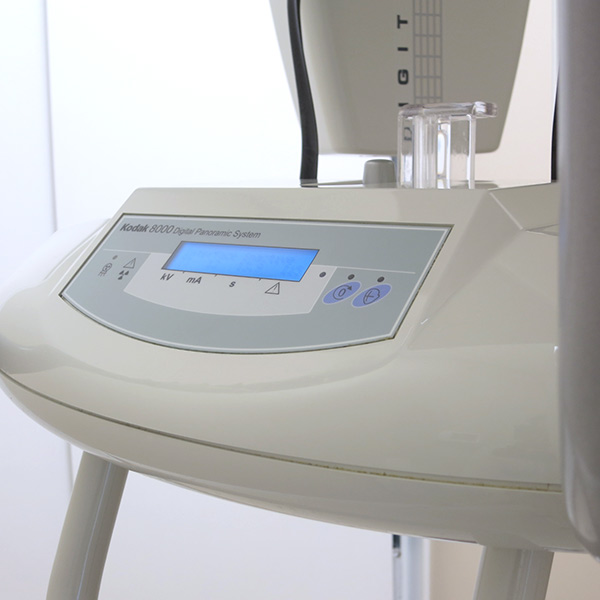
Wisdom teeth need to be removed if they become impacted or are at risk of becoming impacted. Impacted wisdom teeth are wisdom teeth which do not fully emerge into the mouth because of blockage from other teeth or bone. If the wisdom teeth do not have enough space to grow into the mouth, pain can develop with the onset of inflammation or infection, or damage to the adjacent teeth. If you have not had your wisdom teeth removed and are experiencing pain near the back of your jaw, it may be worth visiting your dentist to find out if you need to have your wisdom teeth extracted. A panoramic X-ray shows the position of the wisdom teeth and their roots.
Signs your wisdom teeth may need to come out
Pain at the back of the jaw
Aching or pressure behind the last molars, sometimes spreading to the ear.
Swollen or infected gums
A flap of gum over a partly erupted tooth traps food and bacteria (pericoronitis).
Crowding or damage
A wisdom tooth pushing against the molar in front can cause decay or crowding.
Repeated infections
Bad taste, bad breath or swelling that keeps coming back.
Cysts on an X-ray
Fluid-filled sacs can form around an impacted tooth and damage bone.
Hard to clean
Wisdom teeth that cannot be reached with a toothbrush decay easily.
Not every wisdom tooth needs to come out. Wisdom teeth that are fully erupted, healthy, in a good position and easy to clean can be kept and checked at your regular exams.
What happens during the extraction and after my wisdom teeth are extracted?
The standard wisdom tooth extraction procedure is to create a small incision in the gum, section the tooth if necessary and remove it in pieces. This can be completed under local anesthetic, IV sedation or general anesthetic. Simple cases are done in our office; very complex cases may be referred to an oral surgeon.
Most patients will experience some pain and swelling that can be managed with over-the-counter medication such as acetaminophen or ibuprofen, and return to school or work in 2 to 3 days.
What is recovery like?
Rest and ice
Bite on gauze, use a cold compress, eat soft cool foods and avoid straws, smoking and spitting.
Peak swelling
Swelling and stiffness are usually worst now, then improve. Start gentle salt water rinses.
Back to normal
Most people return to work or school. Keep chewing on the other side and avoid crunchy foods.
Healed
Gums close over. Any stitches dissolve or are removed at a quick follow-up.
Wisdom teeth FAQs
Wisdom teeth usually come in between 17 and 25, and when removal is needed it is often easier in the late teens or early twenties, before the roots are fully formed and the bone becomes denser. Adults of any age can have them removed if they are causing problems.
Not during the procedure. The area is fully frozen, and IV sedation is available so you can relax and remember little of the appointment. Afterwards, expect some soreness and swelling for a few days that is well controlled with over-the-counter pain medication.
Often, yes. Removing all four in one visit, usually under IV sedation, means a single recovery period. Your dentist will recommend what is best based on the position of the teeth and your health.
A single simple wisdom tooth may take only a few minutes. Removing four impacted wisdom teeth typically takes about an hour, plus time to settle in and recover from sedation.
A dry socket occurs when the blood clot protecting the extraction site is lost, exposing the bone and causing throbbing pain a few days after surgery. Avoiding straws, smoking and vigorous rinsing for the first few days greatly reduces the risk. If it happens, we place a soothing dressing that relieves the pain quickly.
Soft, cool foods for the first few days: yogurt, smoothies (no straw), mashed potatoes, soup that is not hot, scrambled eggs and pasta. Gradually return to normal foods as the sockets heal, avoiding seeds, nuts and crunchy items for about a week.
If you have IV sedation, yes. You must have a responsible adult take you home and stay with you, and you should not drive, work or make important decisions for 24 hours. With local freezing only, you can drive yourself.
Does my dental insurance cover wisdom teeth extraction?
Coverage varies by policy, but typical dental insurance plans cover the extraction of wisdom teeth, and oral surgery is a covered service under the CDCP. We can help determine what is covered by your policy when you come in for an appointment.
Portions excerpted from https://en.wikipedia.org/wiki/Impacted_wisdom_teeth under the Creative Commons license.


Yorku student, I already used my dental coverage, Want to know how much it costs to remove wisdom teeth
Hi Affan, the cost for wisdom tooth extraction varies a lot on a case-by-case basis. We won’t know the exact cost until we can do a proper assessment with X-rays. Please feel free to book a consultation with us. Thanks!
Hello, i have a swollen bump in my third wisdom tooth ( pericoronitis ) which is feeling extremely itchy right now and i have difficulties in eating.
I did not have any fever, only some severe headache and the next day i had this pericoronitis symptom
How do i treat this symptom, and how do i know of it is in serious or mild conditions according to my statement above.
Hi Voez, pericoronitis could potentially become very painful in a very short time, or it could potentially go away on its own after some discomfort. Although you don’t have a fever, the bump and severe headache is definitely a concern. Please visit a dentist as soon as you can. You may need professional treatment such as prescription antimicrobial mouth rinse or extraction.
Hi Dr. Li, I recently had all 4 of my wisdom teeth removed a little over a week ago. My bottom left tooth was impacted and the doctor had a harder time getting it out than the other side; he had to cut it into smaller pieces. Everything has healed fine, except now I have pain in my jaw on the left side whenever I try to open my mouth wider than 2 fingers’ width. I noticed that my lower jaw shifts towards the left when I open it, but returns to the center when I close it. The pain has been stable and hasn’t gotten worse, but also not any better. I’ve heard this is common after wisdom tooth removal, but I could not find information on how to help it heal. What are some things I can do at home to help it? Is it permanent? Thank you.
Hi Claudia, what you are experiencing is common after a difficult extraction. Patients often find it difficult or painful to open their mouths due to the ligaments in the jaw joint having been stretched, swelling in the tissue, and sometimes muscle spasms. Healing times varies from patients to patient. Try to avoid anything that could cause more stress on your jaw joint like chewing gum or food that requires you to open your jaw too wide (cut food into smaller bites). If you’re usually a side sleeper, try sleeping on your back instead of the side of your face. As I cannot reliably assess your condition without an examination, I would encourage you to visit your dentist if things don’t seem to be improving or you still have concerns.
Hi. I had a wisdom tooth removed yesterday. During the freezing injection, I could feel novacaine spray onto my tongue. Although the freezing in my gums went away within hours, I can still feel all the spots on my tongue that were sprayed are still frozen. Is this normal and/or is there anything I should do at this point?
Hi Glenda, the roots of a wisdom tooth are sometimes located close to the nerve of the tongue. During the injection and/or removal of the wisdom tooth, the nerve may become slightly bruised or damaged. It is a common potential risk associated with wisdom tooth extraction. In most cases, a loss of sensation will diminish over time, but in some rare cases can be permanent. Please contact your dentist or oral surgeon’s office to report the numbness in your tongue if the sensation has not returned.
Is it normal practice for my dentist to create a blood clot ahead of time and insert it after the extraction of my wisdom tooth?
I’m not sure why dry socket takes 2 days to start, but my current condition since my extraction is exactly as dry socket was described everywhere.
Sever throbbing pain from ear to ear began immediately after freezing wore off 3 hours post op. Pain medication has no relief. It’s been 4 days since my appointment, should I call my dentist and schedule an appointment?
Hi Caleb, based on your description I am not certain whether or not you have a dry socket. But since you are in severe pain, I would encourage you to book a follow up appointment with your dentist as soon as possible.
I got my wisdom teeth removed 10 days ago and if I pull on my cheek the gum around my back molar moves. Like it comes off the tooth. Is this normal?
Hi Michelle,
Unfortunately, without a physical examination of the area I won’t be able to provide you with an accurate diagnosis. For the removal of some impacted wisdom teeth or difficult extraction cases, the surgeon may need to create a gum flap and remove some bone around the tooth, so you may see some excess gum or a gum flap during healing period. However, I would encourage you to consult with your your dentist or oral surgeon regarding your specific case.
I had my wisdom tooth extracted 3 years ago. It was an impacted teeth and the dentist I attended wasn’t as experiences, hence when she struggled to extract the tooth,she only removed it partially. I still have the roots and half of my teeth by the bone. It’s been broken and has sharp edges sticking out in the x-ray. It didn’t initially bother me but not I started to feel some discomfort. The dentist told me not to worry about it but I want to know if that’s dangerous? Thanks
Hi Sarah, unfortunately, I cannot assess the condition of your wisdom tooth without an in-person examination. I would suggest booking an appointment with an oral surgeon to discuss your situation.
Had my wisdom teeth removed a week and a half ago. (only bottoms) One side has almost completely healed there is only a tiny hole left but on the other side there a big hole that food keeps getting stuck in i drain it with a syringe every night I have no pain im just concerned because the one side is almost completely healed the other sides hole is huge especially when I use my finger to widen my mouth.
Hi Matt, some wisdom teeth are more difficult to remove due to differing degrees of impaction. A bigger gum flap may need to be incised and more bone removal may be required for the more impacted teeth. These teeth may leave a bigger hole behind. It is still normal to see the hole a week after extraction. If you are experiencing an unusual amount of pain, or a bad taste and swelling in the area, call your oral surgeon as soon as possible for a post-op checkup.
Last year November (about 11 months ago), I had four wisdom teeth removed, and it has healed well. Recently, I noticed a hard bump underneath my gums on both sides of my top teeth, where my wisdom teeth were removed. Is it possible that another set of wisdom teeth grew in after the first set were removed?
Hi Angela, it is not possible for another set of wisdom teeth to grow in. Unfortunately, I cannot tell you what the bump is without an examination of the area. If there is no discomfort, swelling, and rapid change in the size of the bump, you can probably just mention it to your dentist at your next visit to find out what it is.
Is it possible for an adult tooth to grow in at 23 years old? ( Not a wisdom tooth but a canine tooth ) I had my baby one taken out too soon when I was young and was told it would not have room to come down, now I just noticed today that the very tip of it is protruding through the gum, does this mean it might actually come down? Also my wisdom teeth are coming in now, could that have affected this at all?
Hi Jessica, it is unlikely but still possible for a retained tooth to erupt at age 23. However, it may or may not come down all the way to the same level as other teeth.
I have been having awful headaches with sinus pressure. I am wondering if my wisdom teeth could be causing these?? My wisdom teeth have started to decay. I have been to the doctor and he keeps saying allergies are causing my headaches but nothing he’s provided has helped. And advice would be great.
Hi Darcelle, headaches with sinus pressure can be caused by many things including decaying wisdom teeth. It is not possible for me to know for sure without a physical examination and x-rays. Please visit a dentist as soon as possible to avoid possible infection.